

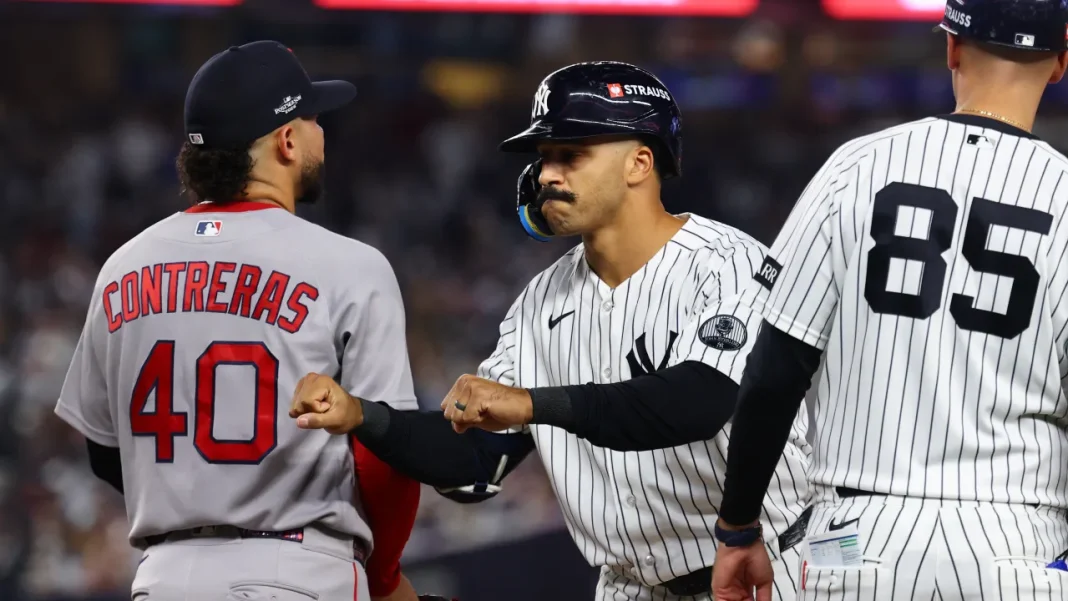
The Yankees vs Red Sox rivalry is one of the most famous and competitive matchups in Major League Baseball (MLB). Featuring the New York Yankees and the Boston Red Sox, this historic contest brings together two teams with passionate fan bases, rich traditions, and decades of memorable baseball moments. Every meeting between these American League East opponents carries a special atmosphere, whether the teams are competing for division standings, a postseason position, or simply bragging rights.
The rivalry attracts baseball fans because it combines outstanding individual performances, strategic decisions, dramatic comebacks, and the pressure of playing against a familiar opponent. Both franchises have enjoyed championship success and produced some of the sport’s greatest players. Their games frequently receive national attention, making this matchup an important part of the MLB calendar. Understanding the rivalry means looking beyond the final score to appreciate its history, player contributions, tactical battles, and lasting influence on baseball culture.
The History Behind the Rivalry
The competition between New York and Boston developed over more than a century of American League baseball. The Red Sox were among the league’s early successful franchises, while the Yankees gradually established themselves as one of baseball’s most dominant teams. Changes in ownership, player movements, championship results, and memorable encounters helped transform their meetings into a major sporting storyline.
One of the most significant chapters began when Boston sold Babe Ruth to New York after the 1919 season. Ruth became a central figure in the Yankees’ rise to prominence, and Boston’s championship drought became closely associated with the so-called Curse of the Bambino. Although the curse was a cultural narrative rather than a literal sporting force, it became a powerful part of baseball history.
The rivalry reached another defining moment in 2004, when Boston overcame a three-games-to-none deficit against New York in the American League Championship Series. The Red Sox won four consecutive games and subsequently captured the World Series title. That comeback remains one of the most celebrated achievements in MLB postseason history and changed the way many fans viewed the rivalry.
Yankees vs Red Sox: Why Every Match Matters
Games between these teams matter because division opponents regularly influence each other’s path toward the playoffs. A victory can improve a club’s standing, provide momentum during a difficult stretch, and create an advantage in the season series. Even early-season games can become important when teams are separated by only a few wins later in the year.
The Yankees traditionally draw attention for their powerful lineups, high-profile players, and championship expectations. The Red Sox are known for their historic connection with Boston supporters, offensive talent, and ability to produce memorable performances against their rivals. However, neither team’s reputation guarantees success on game day. Pitching execution, defensive reliability, bullpen management, and timely hitting often determine the outcome.
The intensity also comes from familiarity. Players face similar opponents repeatedly throughout the season, allowing managers to identify weaknesses and make tactical adjustments. Fans remember previous confrontations, controversial moments, dramatic home runs, and postseason eliminations. This combination of current competition and historical emotion gives every series a distinct identity.
Legendary Players Who Shaped the Competition
Both franchises have featured baseball legends whose performances helped define their identities. For the Yankees, Babe Ruth, Lou Gehrig, Joe DiMaggio, Mickey Mantle, Derek Jeter, and Mariano Rivera represent different eras of success. Ruth transformed the team’s offensive profile, Gehrig became a symbol of consistency, and DiMaggio and Mantle helped sustain the franchise’s legendary reputation.
Jeter became one of the defining Yankees of the modern era through his leadership, postseason performances, and dependable hitting. Rivera, meanwhile, established himself as one of the greatest relief pitchers in baseball history. Their contributions reinforced New York’s tradition of performing under intense expectations.
Boston has its own distinguished group of stars, including Ted Williams, Carl Yastrzemski, David Ortiz, Pedro Martinez, and Jim Rice. Williams is remembered for his exceptional hitting, while Yastrzemski represented the franchise across multiple generations. Ortiz became a central figure in Boston’s championship successes during the 2000s, delivering important hits in high-pressure situations. Martinez’s pitching performances also made him a major presence in the rivalry.
These players represent different periods, so historical comparisons should account for changing rules, competition, and playing conditions. Their lasting importance comes from more than statistics: they helped shape the identities, traditions, and expectations of two iconic franchises.

Key Matchups That Can Decide a Game
Individual matchups frequently influence the direction of a Yankees–Red Sox contest. A powerful hitter facing an elite starting pitcher creates a strategic battle in which pitch selection, location, timing, and discipline all matter. One mistake over the middle of the plate can lead to a home run, while a well-executed breaking ball may produce a crucial strikeout.
Starting pitchers establish the rhythm of the game. They need to limit walks, control opposing hitters, and avoid allowing early innings to become expensive. Managers also consider how many times a pitcher has faced the lineup and whether a matchup favors a bullpen change. A starter who works efficiently can preserve relief options for the later innings.
The bullpens become especially important in close games. Relievers may be brought in to face a specific hitter, protect a narrow lead, or escape a bases-loaded situation. Defensive positioning, communication between fielders, and the ability to turn double plays can also prevent runs. When the teams are evenly matched, small decisions and individual execution can matter as much as overall batting power.
Team Comparison Table
The following table highlights broad characteristics of the two franchises rather than current-season statistics or a prediction for a specific game.
| Category | New York Yankees | Boston Red Sox |
|---|---|---|
| League | American League | American League |
| Division | AL East | AL East |
| Home stadium | Yankee Stadium | Fenway Park |
| Team identity | Historic championship tradition | Historic championship tradition |
| Common tactical focus | Power hitting and pitching depth | Offensive production and situational hitting |
| Fan culture | Strong New York sporting identity | Deep-rooted Boston baseball tradition |
| Famous historical figure | Babe Ruth | Ted Williams |
| Memorable modern-era figure | Derek Jeter | David Ortiz |
| Main series objective | Win division games and build playoff momentum | Win division games and build playoff momentum |
Both teams have evolved considerably across different seasons. Their rosters, coaching strategies, and competitive strengths can change from year to year, so current lineups should always be evaluated separately from historical reputation.
How Yankee Stadium and Fenway Park Influence Games
The home ballpark can shape a team’s offensive and defensive strategy. Yankee Stadium is widely associated with its short right-field dimensions, which can benefit left-handed hitters capable of driving the ball toward that area. Power hitters may approach at-bats differently depending on the pitcher, wind conditions, and the location of the pitch.
Fenway Park is famous for the Green Monster, the tall wall in left field. Its unusual dimensions create opportunities for doubles and other extra-base hits, while demanding specific defensive positioning. Balls that might be home runs in another stadium can become rebounds off the wall, making outfield awareness especially important.
These differences affect more than home runs. Outfielders must judge angles, communicate effectively, and position themselves according to the hitter and situation. Coaches also consider how the dimensions influence pitching choices and defensive alignments. When the teams play at different venues during a series, adapting to the surroundings can become a meaningful part of preparation.
Offensive Strategies and Run Production
Scoring against a strong MLB opponent requires a combination of power, patience, and situational awareness. The Yankees have often been associated with lineups capable of producing extra-base hits and home runs. A single swing can change the scoreboard, but relying exclusively on power can create problems when opposing pitchers limit mistakes and generate ground balls or strikeouts.
The Red Sox can also build productive innings through a mixture of hard contact, walks, doubles, and timely hitting. Moving runners into scoring position, avoiding unnecessary outs, and taking advantage of defensive mistakes can be crucial in close contests. The most effective offensive approach depends on the players available and the opposing pitcher’s strengths.
Important offensive indicators include on-base percentage, slugging percentage, strikeout rate, and production with runners in scoring position. These measurements offer different perspectives on a lineup’s performance. Home runs show power, while on-base percentage helps explain how consistently hitters reach base. Looking at several statistics together provides a more balanced understanding of offensive effectiveness.

Pitching, Bullpen Depth, and Defense
Pitching often separates a comfortable win from a frustrating defeat. Starting pitchers must combine command with an effective selection of pitches, changing speeds and locations to prevent hitters from settling into a predictable rhythm. Limiting walks is especially important because free baserunners can turn an ordinary hit into a major scoring threat.
Bullpen depth becomes increasingly valuable during long series and demanding stretches of the schedule. Managers must balance immediate needs against the workload of their relievers. Using the most effective available pitcher in a high-leverage situation can protect a lead, but repeated heavy workloads may affect availability in subsequent games.
Defense provides another layer of support. Reliable infield play prevents extra outs, while alert outfielders can limit runners to singles and doubles. Catchers contribute through pitch framing, blocking, and controlling the running game. The combination of pitching and defense can keep a powerful opponent scoreless long enough for the offense to produce a decisive inning.
Memorable Moments and Postseason Drama
The rivalry’s most famous moments have often occurred when the stakes were highest. Boston’s comeback in the 2004 American League Championship Series stands above many other chapters because the Red Sox became the first MLB team to overcome a three-game deficit in a best-of-seven postseason series. They followed that achievement by winning the World Series, ending an 86-year championship drought.
Other memorable encounters have included dramatic late-inning rallies, outstanding pitching performances, historic home runs, and games that influenced the American League East race. These moments become part of the rivalry’s collective memory and are discussed long after the players leave the field.
The postseason raises the pressure because every decision carries greater consequences. Managers must weigh pitcher matchups carefully, hitters face less room for error, and defensive mistakes can determine an entire series. While regular-season meetings contribute to standings, playoff confrontations can shape a franchise’s identity for generations.
What Fans Should Watch in an Upcoming Match
Anyone following a new Yankees–Red Sox game should focus on the actual lineup, starting pitchers, recent team form, and availability of key players. These factors provide more useful information than relying solely on past championship records or historic rivalries.
Consider the following points when evaluating a matchup:
- Starting-pitcher performance, including recent command and innings completed.
- Bullpen availability after the previous games in the series.
- Batting order changes and injuries affecting important hitters.
- On-base percentage, extra-base hits, and strikeout trends.
- Defensive performance and the ability to prevent additional bases.
- Home-field conditions and the dimensions of the stadium.
- Division standings and the importance of the series to playoff positioning.
Fans should also distinguish between a team’s long-term reputation and its current performance. A club with a celebrated history can still experience inconsistent hitting or pitching problems, while an underdog can win through disciplined at-bats and strong execution. Checking confirmed starting lineups and recent statistics helps provide a more accurate picture of the contest.
Conclusion
The Yankees vs Red Sox rivalry remains a defining part of Major League Baseball because it combines history, championship expectations, legendary players, and intense competition. From Babe Ruth’s move to New York to Boston’s remarkable 2004 comeback, the rivalry has produced stories that continue to influence how fans understand baseball.
The outcome of any individual game depends on current conditions, not history alone. Pitching matchups, offensive discipline, bullpen management, defensive execution, and home-field factors all contribute to the final result. By considering these elements together, fans can appreciate the tactical details behind the excitement.
Whether the teams meet during the regular season or compete under postseason pressure, their encounters offer a compelling mix of tradition and uncertainty. That enduring combination ensures that this historic American League rivalry continues to attract attention from baseball supporters across generations.

