

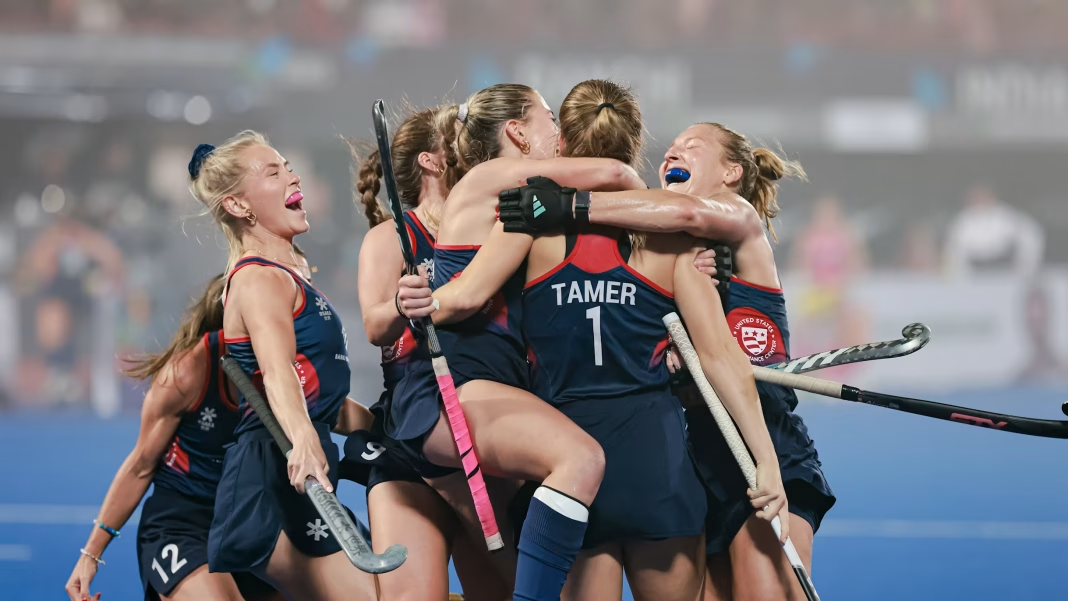
The US women’s hockey team represents the United States in international women’s field hockey, bringing together talented athletes who compete through skill, teamwork, discipline, and determination. The team has developed a strong presence in international competitions, including the Olympic Games, the FIH Hockey World Cup, and Pan American tournaments. Its journey reflects the growth of women’s sports in America and the commitment of generations of players who have helped raise the profile of field hockey across the country.
American women’s field hockey combines athletic ability with tactical awareness. Players must make quick decisions, maintain possession under pressure, defend effectively, and create scoring opportunities against highly organized opponents. Success depends on more than individual talent because every player must understand her role within the team’s overall strategy. With support from coaches, development programs, colleges, and local clubs, the national program continues to create opportunities for emerging athletes while building on the experience of established international players.
Understanding the team’s history, major achievements, current leadership, and competitive ambitions provides a clearer picture of its importance in American sport.
History of the US Women’s Hockey Team
The history of American women’s field hockey stretches back more than a century. Constance Applebee played an important role in introducing and developing the sport in the United States during the early 1900s. In 1922, the United States Field Hockey Association was established to organize and support the game. These early developments helped create a foundation for national competition, coaching, and international participation.
Over the decades, the sport gradually expanded through schools, colleges, clubs, and regional organizations. College field hockey became particularly important because it provided structured competition and helped talented players gain the experience needed to progress toward the national level. The growth of women’s athletics also created more opportunities for training, recruitment, and competitive development.
A major milestone arrived at the 1984 Los Angeles Olympic Games, where the American women’s field hockey team won a bronze medal. This achievement remains a defining moment in the program’s history. The team also earned bronze at the 1994 World Cup in Dublin, demonstrating that American players could compete successfully against established international opponents. These accomplishments strengthened the program’s reputation and inspired future generations of athletes.
Major Achievements and International Success
International competition has played a central role in shaping the identity of the US women’s hockey team. Olympic participation provides the players with an opportunity to represent their country on one of the world’s biggest sporting stages, while World Cup tournaments test their consistency against elite national sides. The program’s Olympic bronze medal in 1984 and World Cup bronze medal in 1994 remain two of its most notable historical achievements.
The United States has also enjoyed important success in Pan American competition. The women’s national side won gold medals at the 2011 and 2015 Pan American Games, establishing itself as a leading force in the Americas. These regional competitions are valuable because they provide high-pressure international experience and opportunities to qualify for major global events.
The team’s record also includes difficult periods, rebuilding phases, and tournaments where results have fallen short of expectations. Such experiences are part of international sport. Strong programs assess their performances carefully, identify weaknesses, and use those lessons to improve future preparations.
For supporters, following the team’s achievements means looking beyond medals. Improvements in defensive organization, passing accuracy, fitness, and competition against higher-ranked opponents can all indicate progress. Consistent development across multiple seasons is often just as important as one outstanding tournament.
Current Players and Team Leadership
The national squad changes according to player form, fitness, selection decisions, and the demands of each competition. The 2026 World Cup selection announced by USA Field Hockey featured a mixture of experienced internationals and younger athletes. Emma DeBerdine and Meredith Sholder were named co-captains, while David Passmore was appointed head coach.
Some notable athletes associated with the 2026 World Cup squad include:
-
Ashley Hoffman — an experienced defender and the most-capped athlete in the selected World Cup group when it was announced.
-
Kelsey Bing — a goalkeeper whose role includes organizing the defense and making crucial saves.
-
Emma DeBerdine — a midfielder and co-captain who contributes to team coordination.
-
Meredith Sholder — a midfielder and co-captain involved in connecting defensive and attacking play.
-
Maddie Zimmer — a versatile midfielder with international experience.
-
Phia Gladieux — a forward who offers attacking threat in the final third.
-
Ashley Sessa — a forward capable of helping the team create offensive opportunities.
-
Beth Yeager — an attacking player included in the 2026 World Cup selection.
These names represent the announced World Cup group, not a guarantee of selection for every subsequent fixture. The national program maintains a broader pool of athletes, and rosters can change between tournaments.
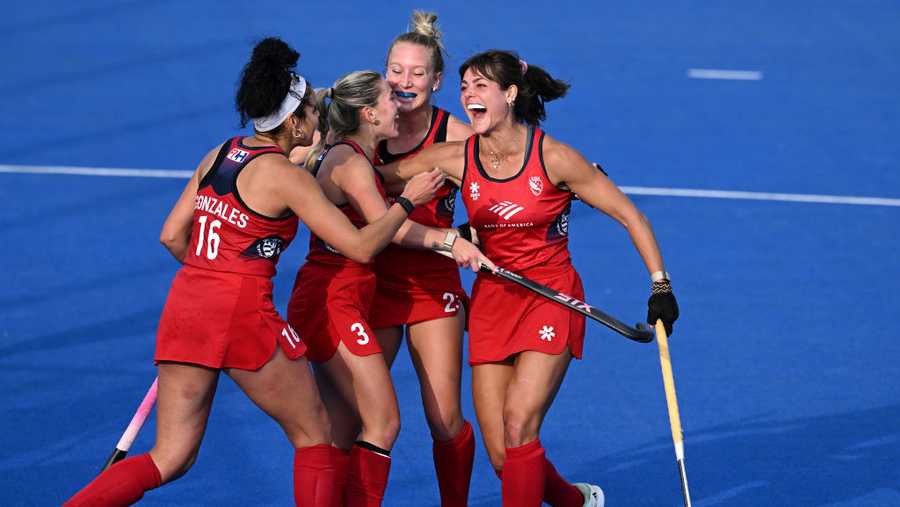
Understanding Player Positions and Responsibilities
Field hockey is a fast-moving sport in which every position contributes to both attack and defense. Players must communicate constantly because possession can change within seconds. A coordinated formation helps the team protect its goal, control the midfield, and create chances near the opposition’s circle.
| Position | Main responsibility | Important qualities |
|---|---|---|
| Goalkeeper | Prevent goals and organize the defense | Reflexes, positioning, communication |
| Defenders | Stop attacks and start forward play | Tackling, anticipation, composure |
| Midfielders | Connect defense with attack | Stamina, passing, awareness |
| Forwards | Create and convert scoring chances | Speed, movement, finishing |
| Team captain | Support leadership and communication | Confidence, discipline, teamwork |
The goalkeeper’s decisions can influence the entire defensive unit. Defenders need to maintain suitable spacing, anticipate passing lanes, and prevent attackers from entering dangerous areas. Midfielders carry a particularly demanding workload because they must support teammates at both ends of the pitch.
Forwards rely on timing, intelligent movement, and accurate finishing. They must recognize opportunities quickly and coordinate with midfielders to create space. The best performances happen when these responsibilities work together rather than when players focus only on individual statistics.
Playing Style and Tactical Approach
Modern international field hockey requires speed, technical precision, and adaptability. The US women’s hockey team must be prepared to respond to different opponents, from sides that press aggressively to teams that defend deep and wait for counterattacking opportunities. Coaches study opposing formations and develop plans that make the best use of their own players’ strengths.
Possession is important, but keeping the ball without creating meaningful opportunities does not guarantee success. Teams need purposeful passing, movement off the ball, and quick transitions into attacking positions. When possession is lost, players must react immediately to close passing lanes and prevent opponents from advancing into dangerous areas.
Penalty corners are another important part of the tactical game. These set-piece situations can produce valuable scoring chances, particularly in closely contested matches. Teams practice injection accuracy, stopping techniques, coordinated runs, defensive formations, and different shooting options. Goalkeepers and defenders also prepare specific responses to these situations.
A successful tactical plan therefore combines several elements:
-
Maintain compact defensive organization.
-
Move the ball quickly when opportunities appear.
-
Communicate clearly during transitions.
-
Create scoring chances through structured attacks.
-
Prepare carefully for penalty corners.
-
Adjust formations according to the opposition.
Fitness supports every part of this approach. Players must accelerate repeatedly, recover quickly, and maintain technical control when tired. Tactical awareness and physical preparation are most effective when developed together.
Recent Competitions and the 2026 Season
The 2026 season represents an important period for the American women’s national field hockey program. According to USA Field Hockey’s published results, the team finished second at the 2025 Pan American Cup and placed fourth at the 2025 FIH Nations Cup in Santiago, Chile. The program also reported gold at a three-nation tournament in January 2026 and bronze at the Nations Cup in June 2026.
The 2026 FIH Hockey World Cup squad was announced in July, marking the team’s return to the tournament after missing the previous edition in 2022. The selection combined established international players with athletes gaining experience at the senior level. This balance was intended to provide competitive maturity while bringing fresh energy into the squad.
International tournaments offer opportunities to measure progress against different styles of play. Matches against strong European, Asian, and South American opponents can expose weaknesses that are less obvious in domestic competition. The lessons gained from these encounters help coaches refine defensive structures, improve finishing, and prepare players for the pressure of major championships.
Supporters following the US women’s hockey team should distinguish between confirmed tournament results, announced selections, and future expectations. Squad announcements and historical results provide useful context, but individual match outcomes and future selections can change throughout the season.
Training, Fitness, and Player Development
Preparing for international field hockey requires a comprehensive training program. Players need cardiovascular endurance, explosive acceleration, balance, coordination, and the ability to maintain control while moving at high speed. Training sessions usually combine technical drills, tactical exercises, strength work, recovery, and match simulations.
Technical development focuses on skills such as receiving the ball, passing accurately, dribbling under pressure, tackling, and shooting. Athletes also practice making decisions quickly because opponents often leave only a small window to complete a pass or take a shot. Repetition helps players perform these actions reliably during demanding matches.
Mental preparation is equally important. International athletes must remain composed after conceding a goal, recover from mistakes, and stay focused during close contests. Team meetings, video analysis, goal setting, and communication exercises can help players build confidence and maintain concentration.
The development pathway begins well before senior international selection. School teams, youth clubs, regional programs, and college competitions help athletes build foundational skills. College field hockey is particularly valuable in the United States because it gives players access to regular competitive matches, coaching, and structured athletic development.
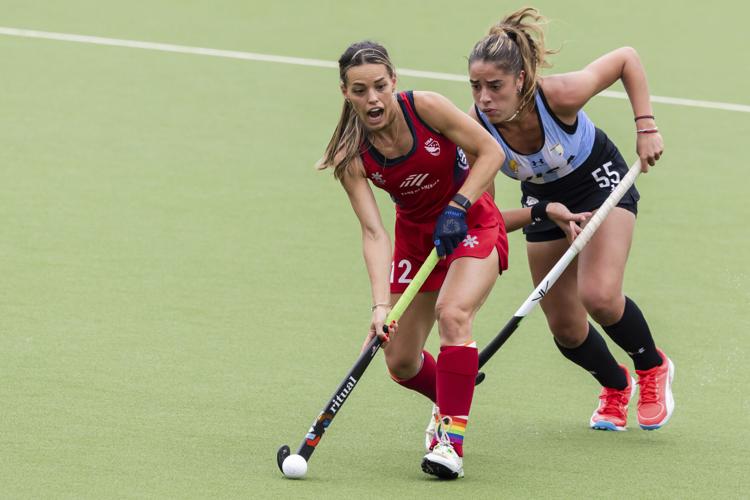
Challenges Facing American Women’s Field Hockey
Despite its achievements, American field hockey faces several challenges. It competes for attention with more widely followed sports, which can affect media coverage, sponsorship opportunities, and public awareness. Increasing visibility is important for attracting young athletes, supporting national-team programs, and encouraging more families to participate in the sport.
Another challenge is maintaining consistent performance against countries with established international field hockey traditions. Elite teams often have deep player pools, extensive competition schedules, and highly developed tactical systems. Closing the gap requires sustained investment in coaching, athlete development, performance analysis, and international match experience.
Injury prevention and player welfare are also essential. The physical demands of repeated sprinting, rapid changes of direction, and contact with opponents require appropriate conditioning and recovery. Athletes benefit from individualized training plans, good nutrition, sufficient rest, and access to qualified medical support.
The program can continue strengthening its position by focusing on:
-
Expanding youth participation and coaching opportunities.
-
Supporting athletes as they transition from college to international competition.
-
Increasing the visibility of women’s field hockey.
-
Developing technical skills and tactical flexibility.
-
Building depth across every playing position.
-
Using performance analysis to improve decision-making.
Progress in these areas can strengthen the national program over the long term rather than relying on isolated tournament performances.
Future Goals and Olympic Ambitions
The Los Angeles 2028 Olympic Games offer a major opportunity for American field hockey. In December 2025, the International Olympic Committee and the International Hockey Federation announced that the United States men’s and women’s national teams would compete at the 2028 Games. As a result, the women’s program has a clear opportunity to prepare for a home Olympics.
Competing at a home Olympics can generate additional public interest, but it also brings expectations and pressure. Preparation involves more than selecting talented players. Coaches must develop a cohesive squad, improve consistency, build match fitness, and ensure that athletes can execute their plans against the world’s strongest teams.
The US women’s hockey team can use the experience gained from World Cup and regional competitions to identify areas for improvement before Los Angeles. Strong performances against international opponents, better conversion of scoring opportunities, and disciplined defending will all be important indicators of readiness.
Long-term success also depends on building a sustainable pipeline of athletes. Young players need opportunities to develop without losing sight of education, health, and personal well-being. A strong development system can help the national program remain competitive across multiple Olympic cycles.
Conclusion
The US women’s hockey team has a proud history, highlighted by Olympic and World Cup medals, Pan American success, and generations of committed athletes. Its development reflects the dedication of players, coaches, clubs, colleges, and organizations that have helped women’s field hockey grow across the United States.
The 2026 season brings new challenges and opportunities, while the Los Angeles 2028 Olympics provide an important future milestone. Continued investment in player development, tactical preparation, fitness, and public engagement can help the program build on its achievements.
For fans, the team’s story is about more than wins and losses. It is about teamwork, resilience, sporting ambition, and the continued growth of women’s field hockey in America.

