

Introduction
Australia vs India Women has become one of the most closely followed matchups in international women’s cricket. The two teams bring different cricketing traditions, talented players, tactical approaches, and a strong competitive spirit whenever they meet. Their contests across Test cricket, One Day Internationals (ODIs), and T20 internationals have produced memorable performances and important moments for the development of the women’s game.
The rivalry has also gained greater attention as women’s cricket has expanded globally. Australia have built a strong reputation through consistent performances across formats, while India have developed considerable depth and attracted a huge following. Recent encounters have shown how quickly matches can change through partnerships, bowling spells, fielding efforts, and pressure situations. The Australia vs India Women rivalry therefore offers more than individual results; it highlights the changing character of international women’s cricket.
A Growing International Rivalry
The Australia vs India Women contest has developed into an important fixture on the international calendar. Both sides regularly compete in major ICC tournaments and bilateral series, giving players opportunities to face high-quality opposition in different conditions.
Australia’s cricketing system has traditionally placed strong emphasis on domestic women’s cricket and international preparation. India, meanwhile, has benefited from the growing popularity and professional structure surrounding women’s cricket. The expansion of domestic competitions has provided Indian players with greater opportunities to develop their skills and gain experience against strong opposition.
When these teams meet, the contrast in styles can make matches particularly interesting. Australia have often demonstrated aggressive batting and disciplined bowling, while India possess players capable of changing the momentum through stroke play, spin, pace, and all-round contributions.
Recent T20I Battles
The 2026 T20I series in Australia demonstrated the competitive nature of this matchup. India won the first T20I by 21 runs using the DLS method, while Australia responded with a 19-run victory in the second match. India then claimed the third game by 17 runs, giving the three-match series a 2–1 result in India’s favour. Cricket Australia
These matches illustrated the importance of powerplay batting, middle-over control, and death-over execution. In T20 cricket, even a small shift in momentum can have a major influence on the final result. A quick partnership can transform an average total into a challenging score, while disciplined bowling during the final overs can prevent a strong chase.
The series also showed that both teams can adapt their tactics during a short-format contest. This makes Australia vs India Women particularly engaging for followers of T20 cricket, where individual performances can have an immediate impact.
The Importance of Batting Partnerships
Batting partnerships frequently determine the direction of matches between Australia and India. In limited-overs cricket, teams need both explosive scoring and stable partnerships. A strong opening stand can provide momentum, while a middle-order partnership can rescue an innings after early wickets.
Experienced batters can also influence younger players around them. They understand how to rotate the strike, identify scoring opportunities, and manage difficult bowling spells. At the same time, emerging players can bring attacking intent and innovative shot-making.
The importance of partnerships was visible during the 2026 Women’s T20 World Cup meeting between the teams. Australia successfully chased India’s 170/4, reaching 172/4 in 19 overs. Ellyse Perry and Ashleigh Gardner put together a 100-run partnership that played a central role in Australia’s six-wicket victory. icc
Bowling and Tactical Battles
Bowling is another major component of the Australia vs India Women rivalry. Both teams have access to pace bowlers, spinners, and all-rounders who can be used according to match conditions.
Fast bowlers can create early pressure by attacking the top order, while spinners can become particularly important during the middle overs. Captains must decide when to introduce different bowling options and how to protect scoring areas.
The 2026 ODI series provided a strong example of Australia’s bowling effectiveness. In the third ODI, Australia scored 409/7 before India were dismissed for 224, with Alana King taking four wickets for 33 runs. Australia won by 185 runs and completed a 3–0 ODI series victory. Cricket Australia
Such performances demonstrate why bowling depth is crucial in 50-over cricket. A team may have excellent batters, but controlling the opposition across 50 overs requires multiple reliable bowling options.
Star Players and Leadership
The rivalry has featured numerous established international players. Australia’s experienced group has included players such as Ellyse Perry, Ashleigh Gardner, Beth Mooney, Annabel Sutherland, and Alyssa Healy. India have similarly relied on internationally experienced players including Smriti Mandhana, Harmanpreet Kaur, Deepti Sharma, Jemimah Rodrigues, and Richa Ghosh.
Leadership is particularly important when these teams meet because matches can contain several momentum changes. Captains need to manage bowling rotations, batting orders, field placements, and pressure situations while responding to the opposition’s tactics.
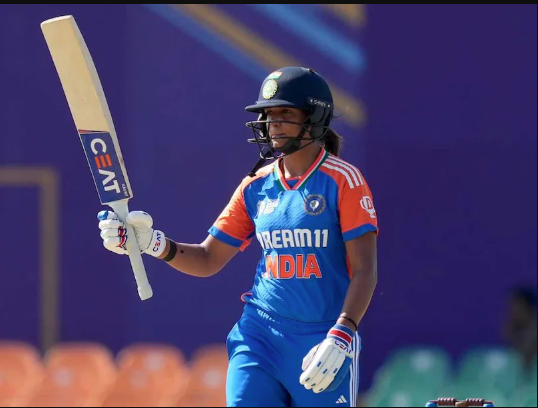
During the 2026 T20 World Cup match, Harmanpreet Kaur scored a quick 56 as India reached 170/4. Australia then completed the chase through contributions from Perry and Gardner. icc
ODI Cricket Offers a Different Challenge
While T20 cricket emphasizes speed and aggressive scoring, ODI cricket requires greater strategic patience. Players have more time to build an innings, and bowlers must maintain their effectiveness over a longer period.
The 2026 ODI series between Australia and India demonstrated this difference. Australia won all three ODIs, with victories by six wickets, five wickets, and 185 runs respectively. Cricket Australia
The third match was particularly notable for Australia’s batting performance. Alyssa Healy scored 158 from 98 deliveries, while Beth Mooney added an unbeaten 106 from 84 balls as Australia posted 409/7. Cricket Australia
Such innings show how an ODI team can combine controlled accumulation with powerful acceleration later in the innings.
Test Cricket Adds Another Dimension
Women’s Test cricket presents a very different challenge from limited-overs matches. Players must manage changing conditions over several days, and technical consistency becomes extremely important.
Australia and India also met in a women’s Test during the 2026 tour. Australia won the match by 10 wickets at the WACA Ground in Perth after India were dismissed for 198 and 149, while Australia recorded 323 in their first innings. Cricket Australia
Test cricket provides opportunities to examine batting technique, bowling endurance, defensive skills, and tactical patience. It also highlights the versatility required from players who compete across all three formats.
The Role of Young Players
One of the most encouraging aspects of Australia vs India Women is the emergence of younger players. International cricket gives developing players an opportunity to test their abilities against experienced opposition.
Young batters must learn how to handle high-quality pace and spin, while young bowlers have to understand how to plan against internationally established batters. Fielding is equally important because modern women’s cricket places increasing emphasis on athletic movement and boundary protection.
As domestic competitions become stronger, more young players are expected to enter international cricket with advanced skills. This depth can make future Australia-India contests even more competitive.
Why the Rivalry Matters for Women’s Cricket

The importance of the Australia vs India Women rivalry extends beyond individual matches. High-profile contests help attract audiences, encourage young players, and increase interest in women’s cricket.
Matches between major cricketing nations also provide opportunities for players to perform in front of large audiences. Strong performances can inspire younger generations to participate in cricket and view it as a serious sporting pathway.
The growth of women’s cricket has also created greater opportunities for professional players, coaches, support staff, broadcasters, and domestic competitions. Rivalries involving prominent teams contribute to that broader development.
What Makes Their Matches Exciting
Several factors make Australia-India matches interesting to watch. First, both teams have experienced international players who understand how to handle pressure. Second, their squads generally contain a combination of specialist batters, bowlers, wicketkeepers, and all-rounders.
Third, matches can change rapidly. A team that appears comfortable after ten overs may suddenly lose several wickets, while a powerful partnership can completely alter the situation. Fielding moments, bowling changes, dropped catches, and tactical decisions can all become important.
The 2026 T20 World Cup match is a useful example. India posted 170/4, but Australia chased the target in 19 overs and won by six wickets. Cricket Australia
The Future of Australia vs India Women
The future of this rivalry is closely connected to the continued growth of women’s cricket. With more international fixtures, professional leagues, improved facilities, and expanding audiences, both teams are likely to continue developing their squads.
India’s growing domestic structure can provide an increasingly large pool of players, while Australia’s established cricketing system continues to produce experienced international talent. The combination creates a strong foundation for future contests.
For supporters, this means there should be plenty of opportunities to see different generations of players compete. Young cricketers will gradually take on larger roles, while experienced stars will continue to influence important matches through leadership and knowledge.
Conclusion
Australia vs India Women represents an important modern rivalry in international women’s cricket. Their contests cover all three formats and regularly feature strong batting, varied bowling attacks, tactical decisions, and individual performances.
Recent results demonstrate the changing nature of the rivalry. India won two of the three T20Is during their 2026 tour of Australia, while Australia won the ODI series 3–0 and later defeated India in the 2026 Women’s T20 World Cup group stage. Cricket Australia
As women’s cricket continues to expand, matches between these two teams are likely to remain significant fixtures. The combination of experienced players, emerging talent, competitive matches, and passionate supporters ensures that Australia vs India Women will continue to attract attention across the cricketing world.

