

Introduction
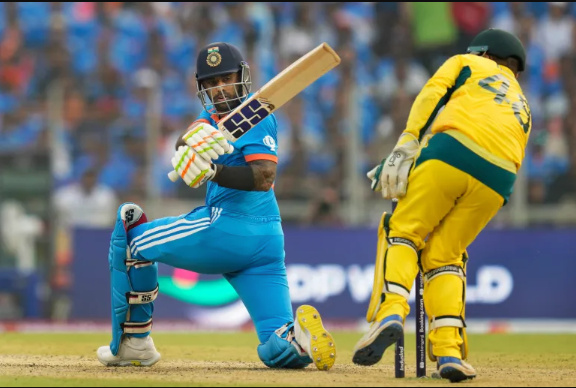
Australia and India have developed one of the most entertaining rivalries in international cricket, and their T20 meetings regularly attract attention from fans around the world. The shorter format places enormous importance on quick scoring, smart bowling changes, athletic fielding and the ability to handle pressure during crucial moments. Because both teams have produced outstanding white-ball players, an Australia vs India T20 match can change direction within only a few overs.
The rivalry has become particularly interesting because the teams bring different cricketing traditions and tactical approaches to the shortest format. India have traditionally built their T20 game around a deep batting lineup, varied spin options and aggressive stroke play, while Australia have often relied on powerful batting, pace bowling and experienced campaigners. Their recent meetings have produced high-scoring contests, close finishes and important tournament moments. Cricket Australia
History of Australia and India in T20 Cricket
The first official men’s T20 internationals between Australia and India came during the early years of international T20 cricket. Since then, the teams have met in bilateral series as well as major ICC tournaments. Every generation has introduced new players and tactical ideas, keeping the contest fresh rather than allowing it to depend entirely on previous results.
An Australia vs India T20 encounter is also significant because both countries have developed strong domestic T20 systems. India’s Indian Premier League has created a large pool of players accustomed to high-pressure T20 cricket, while Australia’s Big Bash League has provided another important environment for developing short-format skills. These domestic competitions have helped players become comfortable with power hitting, specialist bowling roles and demanding fielding situations.
Australia vs India T20 Head-to-Head Record
The overall head-to-head record shows a competitive rivalry with India holding an advantage in the number of T20 internationals won. Available statistics list 32 meetings, with India winning 20, Australia winning 11 and one match ending without a result. myKhel
However, head-to-head numbers do not fully describe the nature of the contest. T20 cricket is highly dependent on conditions, team combinations and performances on a particular day. A side can dominate one phase of a match and still lose because of a late batting collapse or an exceptional bowling spell. This uncertainty is one reason an Australia vs India T20 match remains difficult to predict simply from historical statistics.
Why the Rivalry Is So Competitive
Both teams possess players capable of changing a game in a very short period. A batter can score 30 or 40 runs from a limited number of deliveries and completely alter the required run rate. Similarly, a bowler taking two wickets in a single over can transform a comfortable chase into a difficult one.
Another important factor is tactical flexibility. Captains must decide when to introduce spin, which bowler should handle the death overs and whether an aggressive batter should continue attacking or reduce risk. Australia and India both have experienced players who understand these situations, making their encounters tactically fascinating.
Batting Strength and Power Hitting
Batting is often one of the main attractions when these teams meet. Modern T20 cricket rewards players who can score quickly without losing their wicket. Openers have an especially important role because they can take advantage of fielding restrictions during the first six overs.
India have frequently produced technically strong top-order batters who can combine conventional cricketing shots with innovative T20 strokes. Australia’s batting approach has also featured aggressive stroke-makers capable of clearing the boundary from different areas of the ground. In an Australia vs India T20, the opening partnership can therefore establish the direction of an entire innings.
Middle-order batters are equally important. They must maintain momentum after the powerplay while preparing for an acceleration during the final overs. Players who can rotate the strike between boundaries are particularly valuable because they prevent the bowling side from building pressure.
The Importance of Bowling
Bowling can determine whether a strong batting performance becomes a winning total. T20 bowlers have very little room for error because even one poorly executed delivery can travel to the boundary.
Fast bowlers generally try to use changes of pace, yorkers, bouncers and variations in length. Spinners can attack during the middle overs by changing their pace and trajectory. Both Australia and India have traditionally used combinations of pace and spin rather than depending on a single bowling style.
Death bowling becomes especially important. The final four overs can produce a large percentage of the innings total, so teams need bowlers who can remain accurate under pressure. In a close Australia vs India T20, the performance during these final overs can make the difference between victory and defeat.
Spin Versus Pace: A Fascinating Battle
The contrast between Australia’s pace resources and India’s traditionally strong spin options can create an interesting tactical battle. Australian conditions can offer bounce and carry, while Indian pitches can sometimes provide greater assistance to spinners depending on the venue and surface.
Modern cricket has made these distinctions less predictable. Fast bowlers have developed slower balls and cutters, while spinners increasingly use variations designed specifically for T20 cricket. Batters have also become better at targeting particular bowlers.
The result is that an Australia vs India T20 match can involve constant tactical adjustments. Captains may change their bowling plans according to the batter at the crease, the required run rate and the condition of the ball.
Memorable Recent Encounters
Recent meetings have demonstrated how closely matched these teams can be. At the 2024 T20 World Cup, India defeated Australia by 24 runs after making 205/5, with the result coming during the Super Eight stage. myKhel
The 2023 bilateral series in India was also filled with high-scoring games. Australia won the third T20I after chasing India’s 222/3, while India won the second match by 44 runs and the fourth by 20 runs. The fifth game saw India win by six runs. myKhel
These results demonstrate how rapidly momentum can move between the two teams. Rather than being dominated by one consistent pattern, their recent contests have included both successful run chases and strong defensive performances.
The Role of the Middle Overs
The middle overs are sometimes less dramatic than the opening and closing stages, but they can decide an Australia vs India T20 contest. During this phase, batting teams try to maintain a healthy scoring rate while avoiding unnecessary wickets.
Spinners and change-of-pace bowlers often become particularly influential during these overs. Batters need to identify which deliveries can be attacked and which should simply be rotated for singles and doubles. A team that scores steadily through overs seven to fifteen enters the final stage with greater freedom.
For the bowling team, this period provides an opportunity to control the scoring rate and create pressure. Dot balls become valuable because they force batters to take greater risks later in the innings.
Fielding and Fitness
T20 cricket has made fielding more important than ever. A spectacular catch, direct hit or boundary-saving dive can save several runs and change the momentum of a match.
Australia have traditionally built a strong reputation around athletic fielding, while India have invested heavily in improving fitness and fielding standards. Modern players are expected to cover large areas quickly and maintain concentration throughout the innings.
In a tight Australia vs India T20, a single saved boundary can be as valuable as several runs scored by a batter. This makes fielding an important third component alongside batting and bowling.
Impact of Home Conditions
Venue conditions can significantly affect the way these teams approach a T20 match. Australian grounds can have large boundaries, substantial bounce and pitches that encourage fast bowlers. Indian venues vary considerably, with some surfaces traditionally helping spinners and others supporting high-scoring batting.
Teams therefore need to adjust their combinations according to the location. A side may select an additional spinner on one pitch but choose another specialist fast bowler at a different venue.
This adaptability is particularly important in an Australia vs India T20 series because several matches can take place at very different grounds. Players must quickly understand the surface, boundary dimensions and weather before deciding their tactics.
Recent Australia vs India T20 Series
The 2025 series in Australia provided another chapter in the rivalry. India won the fourth T20I at Carrara by 48 runs after scoring 167/8, while the fifth match at Brisbane was abandoned. NDTV Sports
The series demonstrated once again that conditions and individual performances can heavily influence the outcome of T20 matches. Bowling spells during the middle overs, partnerships at the top of the order and the ability to finish an innings strongly all remained important factors.
For supporters, these matches also highlighted how quickly a T20 game can move from one team’s control to the other’s.
Players Who Can Change the Game
Both Australia and India have regularly featured internationally recognized T20 performers. Batters who can score rapidly are especially dangerous during the powerplay and death overs, while versatile all-rounders provide additional tactical options.
All-rounders are valuable because they can contribute in multiple areas. A player capable of scoring useful runs and delivering two or three overs gives the captain greater flexibility when selecting the XI.
Bowlers with strong variations are similarly important. In modern T20 cricket, simply bowling fast is not enough. Accuracy, deception and the ability to understand a batter’s weaknesses can be decisive.
The Importance of the Captain

T20 captains have a difficult job because decisions must often be made within seconds. They need to decide when to introduce a particular bowler, when to move a fielder and how aggressively to approach a chase.
A captain also has to manage specialist players. A batter might be selected primarily for power hitting, while another player may be expected to anchor the innings. Similarly, some bowlers may be reserved specifically for the final overs.
In an Australia vs India T20, captaincy decisions can become especially important because both sides have enough quality to punish tactical mistakes.
T20 Cricket and the Future of the Rivalry
The rivalry is likely to remain an important part of international T20 cricket as both nations continue developing new players. Domestic competitions provide young cricketers with opportunities to learn the demands of the format before moving into international cricket.
Technology is also changing the way teams prepare. Analysts study opposition players, scoring patterns, bowling locations and match situations in extraordinary detail. This means teams can enter an Australia vs India T20 with highly specific plans for individual players.
Yet cricket remains unpredictable. A perfectly prepared plan can disappear after one extraordinary innings or bowling spell. That balance between preparation and improvisation is part of what makes T20 cricket exciting.
What Makes Australia vs India T20 Special for Fans
For supporters, this rivalry combines star players, contrasting cricket cultures and high-pressure situations. The short format means there is rarely a long period without something significant happening. A six can change the required rate, while a wicket can immediately alter the batting team’s strategy.
The international reputation of both teams also adds importance to every meeting. Whether the match is part of a bilateral series or a major tournament, players understand that performances against a high-quality opponent can carry additional significance.
Conclusion
The Australia vs India T20 rivalry represents many of the qualities that make modern cricket exciting. Strong batting lineups, varied bowling attacks, athletic fielding and tactical decision-making create contests in which momentum can change rapidly. Historical statistics show India’s advantage in their overall T20I meetings, but individual matches continue to depend heavily on conditions, team combinations and performances on the day. Cricket Australia
As both countries continue producing talented T20 cricketers, their encounters will remain an important part of the international calendar. The combination of established stars and emerging players ensures that every new series can create different stories. For cricket followers, an Australia vs India T20 remains a contest where strategy, skill and pressure come together over just 20 overs per side.

