

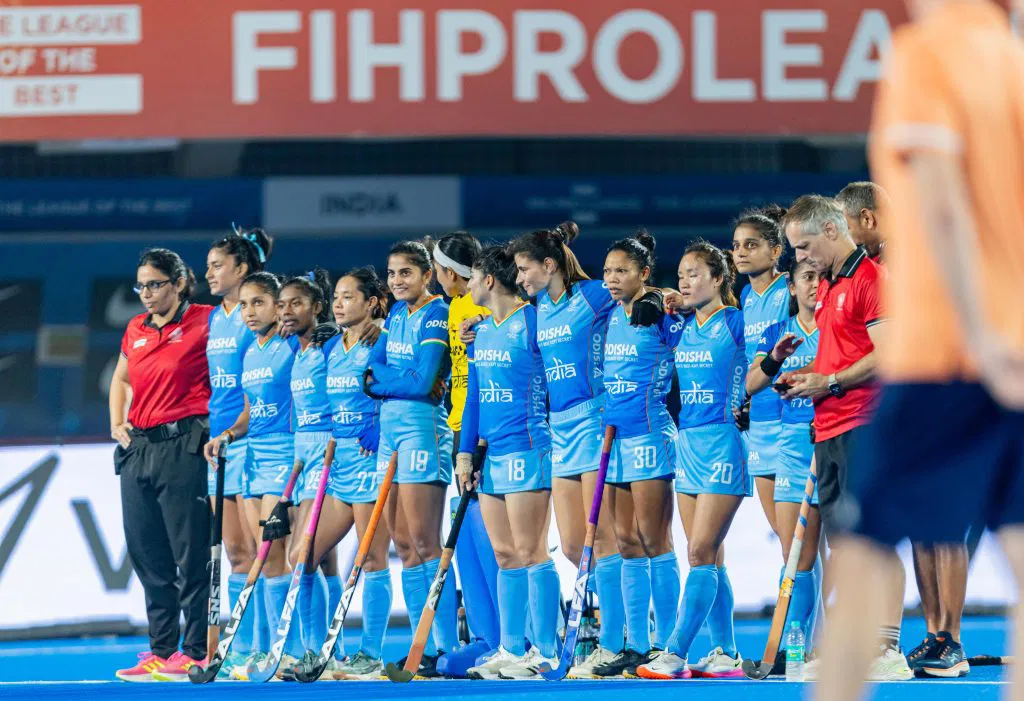
The Indian women hockey team has become an important symbol of determination, teamwork, and progress in Indian sports. Over the years, the team has worked hard to earn recognition on the international stage, competing against some of the strongest hockey nations in the world. Through dedication, disciplined training, and a growing belief in their abilities, Indian women players have helped raise the profile of women’s hockey across the country.
The team’s journey includes memorable international performances, difficult rebuilding periods, and inspiring individual stories. Its progress reflects the commitment of athletes, coaches, support staff, and hockey administrators who continue to develop the sport in India. From major international tournaments to regional competitions, the players aim to demonstrate technical skill, tactical awareness, physical fitness, and mental strength. Their performances have also encouraged more young girls to consider hockey as a serious sporting career.
Understanding the team’s history, achievements, leading players, training methods, and future ambitions provides a clearer picture of how women’s hockey has evolved in India and what may lie ahead.
History and Development of Women’s Hockey in India
Women’s hockey in India has developed over several decades, with the national side gradually establishing itself in international competition. Early generations of players faced limited infrastructure, fewer professional opportunities, and less public attention than many other sporting groups. Despite these obstacles, they continued to represent India and helped create a foundation for future generations.
Participation in international tournaments gave Indian players valuable experience against teams with established hockey systems. Over time, improvements in coaching, fitness preparation, talent identification, and domestic competition helped strengthen the national programme. Players began receiving greater exposure to international playing styles, while structured training environments supported their technical and tactical development.
A major milestone came when India qualified for the women’s hockey competition at the 1980 Moscow Olympics, the first time women’s hockey was included in the Olympic programme. This achievement gave Indian women’s hockey a place in Olympic history. Although progress has not always been consistent, the team’s journey demonstrates how persistence and long-term development can create opportunities for athletes and inspire future sporting talent.
Major Achievements and International Success
The Indian women’s side has achieved several milestones in international hockey, particularly in Asian competitions. Its performances at the Asian Games, Asia Cup, Asian Champions Trophy, and international tournaments have demonstrated the team’s ability to compete under pressure. These achievements have also helped increase public interest in women’s hockey and encouraged investment in player development.
One of the team’s most memorable recent successes came at the Women’s Asian Champions Trophy in 2024, when India defeated China 1–0 in the final. The team also secured silver at the Women’s Asia Cup in 2025 after reaching the final against China. In 2026, India won the FIH Hockey Women’s Nations Cup in New Zealand, defeating the hosts 2–0 in the final and earning promotion to the following season’s Pro League.
Another outstanding milestone arrived at the 2026 FIH Women’s Hockey World Cup, where India finished fifth after defeating Germany 3–1 in the classification match. This represented India’s best World Cup finish since the inaugural tournament in 1974, underlining the team’s growing competitiveness against international opponents.
These achievements show that the Indian women’s programme has the potential to challenge established teams when preparation, execution, and confidence come together.

Key Players of the Indian Women’s Hockey Team
The strength of the national squad comes from the combination of experienced internationals and emerging players. Each position requires a different set of skills, and successful performances depend on how effectively the players work together. Experienced athletes provide composure and leadership, while younger players contribute speed, energy, and new attacking options.
Several players have become important figures in the development of Indian women’s hockey. Their performances in international tournaments have demonstrated the value of technical ability, tactical awareness, and consistent preparation.
Some notable players include:
-
Salima Tete: A dynamic midfielder and captain known for her work rate, ball movement, and leadership.
-
Savita Punia: An experienced goalkeeper recognised for her reflexes, positioning, and ability to make crucial saves.
-
Navneet Kaur: A forward capable of creating scoring opportunities and converting important chances.
-
Lalremsiami: An attacking player known for her pace, movement, and ability to threaten opposing defences.
-
Deepika: A penalty-corner specialist whose powerful drag-flicks provide an important scoring option.
-
Neha: A versatile player who contributes to midfield control and attacking transitions.
These players illustrate the importance of combining individual talent with collective discipline. Their roles can change according to the opposition, match conditions, and tactical approach selected by the coaching staff.
Indian Women’s Hockey Team: Important Facts
The following table summarises some key milestones and characteristics of the national side.
| Category | Details |
|---|---|
| Governing body | Hockey India |
| International federation | International Hockey Federation (FIH) |
| Olympic debut | Moscow 1980 |
| Major continental competition | Asian Games |
| Notable 2024 achievement | Women’s Asian Champions Trophy title |
| Notable 2025 achievement | Women’s Asia Cup silver medal |
| Major 2026 achievement | Nations Cup title |
| 2026 World Cup result | Fifth place |
| Main objective | Sustained international success and Olympic qualification |
These milestones highlight the team’s development across different levels of competition. Success depends not only on medals but also on the ability to improve consistency, develop younger athletes, and maintain a strong performance level against different opponents.
Playing Style and Tactical Approach
Modern women’s hockey demands speed, accurate passing, quick decision-making, and effective transitions between attack and defence. India often looks to use its energetic midfield, quick forward movement, and ability to exploit spaces behind defenders. Players must recognise opportunities quickly because opposing teams can close down space within seconds.
A strong midfield is particularly important. Midfielders connect defenders with forwards, control possession, and help the team recover the ball after losing it. Effective pressing can force opponents into mistakes, while accurate passing allows India to move the ball into dangerous areas. However, attacking pressure must be balanced with defensive organisation to avoid conceding goals on counterattacks.
Penalty corners are another crucial part of international hockey. A well-executed set piece can change the direction of a close match, especially when open-play opportunities are limited. Specialists must coordinate their timing, placement, and shooting technique with teammates who create space and prepare rebounds.
The Indian coaching staff must also adapt tactics according to each opponent. Against teams that dominate possession, defensive discipline and efficient counterattacks become important. Against opponents that defend deeply, patience, creative movement, and precise passing can help create scoring opportunities.
Training, Fitness, and Player Development
International hockey places significant physical demands on players. Athletes need acceleration, endurance, balance, agility, and the ability to make accurate decisions while tired. Training programmes therefore combine technical practice with strength conditioning, speed work, recovery, and tactical preparation.
Players regularly work on ball control, passing combinations, shooting accuracy, defensive positioning, and penalty-corner routines. Video analysis can help coaches identify weaknesses in opposition formations and review their own team’s mistakes. Fitness assessments and performance data can also guide individual training plans.
Mental preparation is equally important. Players must remain composed after conceding a goal, recover from errors, and maintain concentration during penalty shootouts or close finishes. Team meetings, communication exercises, and psychological support can help athletes manage the pressure of major tournaments.
The development pathway also begins well before players enter the senior national squad. School competitions, academies, state-level tournaments, and domestic championships provide opportunities for talented youngsters to gain experience. A stronger grassroots structure gives selectors a wider pool of athletes and helps build depth across every position.
Challenges Facing Indian Women’s Hockey
Despite its progress, the team continues to face challenges that require long-term attention. Competing consistently against the world’s leading nations means improving performance across entire tournaments rather than relying on occasional outstanding matches.
One important challenge is maintaining defensive stability. Small mistakes in marking, communication, or positioning can lead to goals at the highest level. India must also improve its conversion rate when creating attacking opportunities, particularly during penalty corners and close-range situations.
Other important challenges include:
-
Maintaining fitness and preventing injuries during demanding tournament schedules.
-
Providing younger players with sufficient international experience.
-
Improving consistency against physically strong and tactically disciplined opponents.
-
Expanding access to quality facilities, coaching, and competitive opportunities.
-
Increasing sponsorship, media coverage, and public engagement with women’s hockey.
-
Supporting athletes’ education, career planning, and long-term professional development.
Addressing these issues requires cooperation between governing bodies, coaches, academies, sponsors, and the wider sporting community. Sustainable improvement comes from consistent investment rather than short-term preparation before major events.
The Role of Women’s Hockey in Indian Sports
Women’s hockey has an important role in making Indian sport more inclusive and creating opportunities for girls from different backgrounds. Players who reach the international level become visible examples of what can be achieved through determination, structured training, and access to competition.
Their stories can inspire younger athletes to participate in sport, develop confidence, and pursue professional goals. Strong national performances also create opportunities for schools and local organisations to introduce hockey programmes and improve access to equipment and coaching.
Media coverage and sponsorship are important parts of this process. Greater visibility can attract new fans, encourage businesses to support athletes, and help young players understand the possibilities of a sporting career. Celebrating women’s hockey should involve recognising not only tournament victories but also the work required to reach international standards.
A successful national team can therefore influence much more than the scoreboard. It can help change attitudes towards women in sport and encourage wider participation across communities.
Future Goals and Olympic Ambitions
The future of Indian women’s hockey depends on turning recent progress into sustained success. The team has shown that it can perform strongly in major tournaments, but maintaining that standard requires continued tactical development, squad depth, and careful preparation.
After its fifth-place World Cup finish in 2026, India has an important opportunity to build momentum towards the Los Angeles 2028 Olympic Games. Winning the women’s hockey gold medal at the 2026 Asian Games secured India’s direct Olympic qualification, giving the squad a clear target for its next phase of preparation.
Future preparations will need to focus on several priorities:
-
Improving attacking efficiency and penalty-corner conversion.
-
Building defensive coordination against high-pressure opponents.
-
Giving emerging players experience in major international matches.
-
Maintaining physical fitness and mental resilience throughout tournaments.
-
Using match analysis to improve decision-making and tactical flexibility.
The team will also need to manage expectations while continuing to develop. Every international competition provides an opportunity to learn, test new combinations, and identify areas for improvement. Consistency across several seasons will be essential to establishing India as a regular contender for major honours.
Why Fans Should Follow the Indian Women’s Hockey Team
Following the national side offers fans an opportunity to appreciate a fast, technical, and strategically demanding sport. Hockey combines individual creativity with collective organisation, making every match a contest of skill, timing, and decision-making.
Supporters can follow tournament performances, player statistics, squad announcements, and competition results to understand how the team develops. Watching different positions also makes the sport more engaging: goalkeepers must react quickly, defenders organise the back line, midfielders manage transitions, and forwards create scoring chances.
The Indian women hockey team also provides an inspiring example of how athletes can overcome setbacks and continue improving. Its progress reflects years of preparation and the determination of players who represent their country on the international stage.
Greater fan engagement can help strengthen the sport’s profile, encourage young people to participate, and create more opportunities for future generations of Indian hockey players.
Conclusion
The journey of Indian women’s hockey reflects resilience, ambition, and steady sporting development. From its Olympic debut in 1980 to continental titles, international tournament victories, and a fifth-place finish at the 2026 World Cup, the team has established important milestones while continuing to pursue higher goals.
The Indian women hockey team benefits from experienced leaders, promising young players, improving preparation, and growing public recognition. Its recent achievements demonstrate that India can compete effectively against strong international opponents when tactical discipline and teamwork come together.
With direct qualification secured for the Los Angeles 2028 Olympics, the next challenge is to maintain this momentum and continue improving in every department. Sustained investment in grassroots hockey, player development, coaching, and fitness can help the team build on its achievements and inspire more girls to take up the sport. The future holds considerable promise, and continued support will be essential as Indian women’s hockey aims for even greater success.

