


The australian men’s cricket team vs new zealand national cricket team match scorecard is a useful resource for cricket fans who want to understand match results, individual performances, batting contributions, bowling figures, and key turning points. Australia and New Zealand have a competitive cricket rivalry across Test matches, One Day Internationals (ODIs), and Twenty20 Internationals (T20Is), with every format offering a different challenge for players and teams.
A scorecard provides more than the final result. It helps readers evaluate how a team built its innings, which batters contributed the most runs, how bowlers controlled the scoring rate, and which partnerships influenced the outcome. This guide explains how to read the scorecard, compare team performances, understand important statistics, and assess the factors that can decide an Australia versus New Zealand cricket match.
Note: This is a general scorecard guide, not a report of one specific fixture. Exact scores, playing XIs, and match results depend on the match, date, and format.
Understanding the Australia vs New Zealand Match Scorecard
A cricket scorecard is a structured summary of a match. It records each team’s innings, the runs scored by individual batters, wickets lost, overs bowled, and the performance of each bowler. It also includes extras, fall of wickets, partnerships, and the final result when the match has concluded.
When reviewing the Australian men’s cricket team versus the New Zealand national cricket team, begin with the innings totals and wickets lost. Then examine the batting and bowling tables to understand how the match developed. A team scoring more runs is not always the full story in a rain-affected match, where the Duckworth–Lewis–Stern (DLS) method may determine the target. In Test cricket, the follow-on, declaration, and remaining time can also affect the result.
Key details to check
-
Match format: Test, ODI, or T20I.
-
Venue and match date.
-
Toss winner and decision to bat or bowl.
-
Total runs, wickets lost, and overs completed.
-
Top-scoring batters and leading wicket-takers.
-
Extras, partnerships, and fall of wickets.
-
Match result and player of the match, if awarded.
These details provide the foundation for understanding the contest before moving into deeper statistical analysis.
Australia vs New Zealand Scorecard at a Glance
The following table explains the main scorecard fields to look for when reviewing a particular match. It is a reference guide rather than a record of an actual fixture.
| Scorecard detail | What it tells you |
|---|---|
| Team innings | Which team batted and in what order |
| Total score | Runs scored by the batting team |
| Wickets lost | Number of dismissals |
| Overs | Overs completed during the innings |
| Top scorer | Batter who scored the most runs |
| Bowling figures | Overs, maidens, runs conceded, and wickets |
| Extras | Runs from wides, no-balls, byes, and leg-byes |
| Fall of wickets | Score and stage at which wickets fell |
| Result | Winner, tie, draw, or no result, as applicable |
This overview makes it easier for new cricket followers to interpret the match without getting overwhelmed by technical details.

Batting Performance: How to Read the Scorecard
Batting statistics reveal how Australia and New Zealand approached their innings. The total score is important, but individual contributions explain how that total was achieved. A batter who scores quickly in a T20I may change the match in a short period, while a patient innings in a Test match can help a team recover from early wickets or build a commanding lead.
When studying an Australia versus New Zealand scorecard, look at runs scored, balls faced, boundaries, strike rate, and dismissal details. In limited-overs cricket, strike rate helps indicate scoring speed. In Test cricket, batting time, defensive technique, and the ability to build partnerships are also important. Comparing these details gives readers a clearer picture of whether the innings was built through steady accumulation, aggressive hitting, or a combination of both.
Important batting statistics
-
Runs: The total number of runs scored by a batter.
-
Balls faced: The number of deliveries received, excluding certain deliveries such as wides.
-
Fours and sixes: Boundaries that show how effectively a batter found scoring opportunities.
-
Strike rate: Runs scored per 100 balls faced.
-
Dismissal: The method by which a batter was out.
-
Partnership: Runs added by two batters while batting together.
A batter with a high score may not necessarily have had the greatest impact. For example, a quick innings during the final overs can be more influential than a slower innings of similar value, depending on the target and match situation.
Bowling Analysis: Wickets, Economy and Control
Bowling figures help explain how a team restricted its opponent or defended a total. A scorecard typically records each bowler’s overs, maidens, runs conceded, and wickets taken. These figures should be evaluated alongside the match conditions and format because bowling expectations differ between Tests, ODIs, and T20Is.
In an Australian versus New Zealand contest, pace, swing, seam movement, and changes of speed can all influence the outcome. Fast bowlers may exploit bounce and movement, while spinners can become important when the pitch offers turn or when batters attempt to accelerate. A bowler who takes fewer wickets may still make a valuable contribution by maintaining pressure and limiting scoring opportunities.
How to evaluate bowling figures
-
Wickets taken: Identify which bowlers removed important batters.
-
Economy rate: Calculate runs conceded per over.
-
Maidens: Check how often a bowler completed an over without conceding runs.
-
Dot balls: Consider how frequently the bowler prevented scoring.
-
Bowling at key moments: Assess performances during powerplays, middle overs, and the death overs in limited-overs cricket.
Wickets and economy should be considered together. A bowler who concedes runs while taking several crucial wickets may have been more influential than one who delivers economical overs without breaking important partnerships.
Australia vs New Zealand Across Different Formats
The significance of each scorecard statistic depends on the format. Australia and New Zealand compete in all three major international formats, and their scorecards reflect different strategic priorities.
Test matches
Test cricket rewards patience, adaptability, and sustained performance. Scorecards can include two innings per team, individual bowling spells, declarations, and the possibility of a draw. Batters must manage changing conditions, while bowlers work to create pressure over extended periods. First-innings totals, leads, and the timing of declarations are particularly useful when analysing a Test match.
One Day Internationals
ODIs balance wicket preservation with scoring acceleration across a maximum of 50 overs per side. Batting partnerships, run rates, powerplay performance, and death-over execution often shape the result. Bowling figures also reveal whether a team controlled the middle overs or allowed the opposition to build momentum late in the innings.
Twenty20 Internationals
T20Is place a premium on rapid scoring, boundary hitting, and effective use of limited overs. Strike rates, economy rates, powerplay totals, and wickets taken at crucial moments deserve close attention. Even a short partnership can transform a chase, while a sequence of wickets may dramatically change the required run rate.
Key Factors That Can Decide the Match
The australian men’s cricket team vs new zealand national cricket team match scorecard becomes more meaningful when statistics are connected to match conditions. Numbers show what happened, but context helps explain why it happened.
1. Toss and pitch conditions
The toss can influence a team’s initial strategy, especially when weather, moisture, or pitch deterioration affects playing conditions. A surface offering early seam movement may challenge batters, while a flatter pitch may favour high totals. The toss alone does not determine the winner, however; execution remains essential.
2. Partnerships and wicket timing
Partnerships help teams recover from early setbacks or accelerate towards a competitive total. Losing several wickets close together can disrupt momentum and force incoming batters to rebuild. When examining a scorecard, check the fall of wickets to understand whether dismissals occurred during a stable period or at a critical turning point.
3. Fielding and extras
Dropped catches, missed run-out opportunities, misfields, wides, and no-balls can influence a close contest. Extras add runs without requiring a batter to hit a scoring shot, while fielding errors may allow opponents to extend an innings. A complete analysis should therefore consider the fielding contribution alongside batting and bowling statistics.
4. Chasing pressure
During a run chase, the target and required run rate determine how aggressively a team must score. A strong opening partnership can make the target manageable, whereas regular wickets can increase pressure even when the required rate appears reasonable. The final scorecard should be read alongside the progression of the chase whenever ball-by-ball information is available.
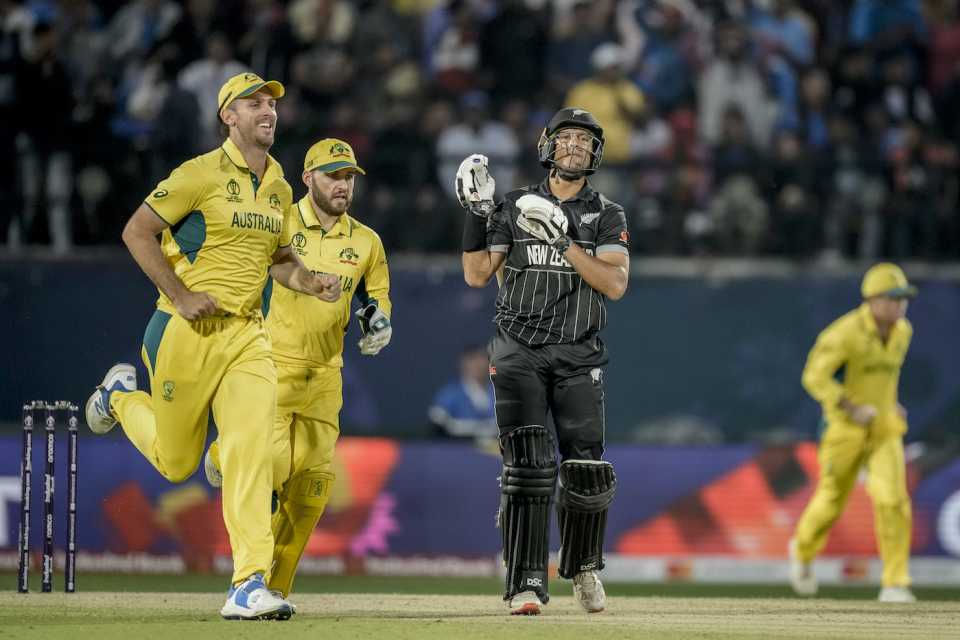
How to Compare Australia and New Zealand Team Performances
A useful match analysis compares both teams across the same categories rather than focusing exclusively on the winner. Start with the total runs and wickets, then compare batting depth, bowling effectiveness, extras, and the ability to perform under pressure.
| Performance category | What to compare |
|---|---|
| Batting strength | Top-order runs and middle-order contributions |
| Scoring efficiency | Run rate, strike rate, and boundary count |
| Bowling effectiveness | Wickets, economy rates, and dot balls |
| Partnership building | Runs added between successive dismissals |
| Fielding quality | Catches, run-outs, and avoidable errors |
| Match management | Response to pressure and changes in conditions |
For example, Australia might build a total through several substantial contributions, while New Zealand might rely on one standout innings supported by its lower order. Alternatively, one team could win by restricting the opponent to a modest total despite scoring fewer boundaries. These are illustrative scenarios, not descriptions of a specific match.
The australian men’s cricket team vs new zealand national cricket team match scorecard is most useful when it allows readers to compare these factors together. It can reveal whether a result came from dominant batting, disciplined bowling, a successful chase, or a combination of strengths.
Common Mistakes When Reading a Cricket Scorecard
Scorecards contain detailed information, but several common mistakes can lead to misleading conclusions.
-
Looking only at total runs: A large total needs context, including the pitch, overs available, and wickets lost.
-
Judging bowlers only by wickets: Economy, pressure, and the quality of dismissed batters also matter.
-
Ignoring the match format: A strike rate that is useful in a T20I may have a different significance in a Test.
-
Confusing overs with balls: An over consists of six legal deliveries, so an entry such as 17.4 overs means 17 overs and four legal balls, not 17.4 decimal overs.
-
Overlooking extras: Wides and no-balls can affect totals and, in some circumstances, provide additional deliveries.
-
Assuming every match has a winner: Test matches may be drawn, and limited-overs matches may end in a tie or no result.
Readers should also distinguish confirmed match statistics from predictions, projected totals, and live scores. Before publishing a match report, verify the date, venue, format, final result, and individual figures against an authoritative scorecard. This is particularly important when multiple Australia–New Zealand fixtures occur within the same series.
Where to Find the Most Useful Scorecard Information
For a reliable match review, use an official cricket board’s match centre or a recognised cricket statistics service. Check whether the scorecard is live or final, because figures can change during an innings and may be corrected after the match.
The most useful information usually includes:
-
The complete innings summary for both teams.
-
Batting figures and dismissal details.
-
Bowling figures, including overs and runs conceded.
-
Fall-of-wickets information and partnerships.
-
The official result and player-of-the-match award.
-
Match conditions, including any DLS adjustment or other unusual circumstances.
If you are preparing a blog post, avoid inserting estimated scores or invented player performances. Use the actual fixture details before adding team totals, player names, or match highlights. A general guide can explain how scorecards work, but a match-specific article requires verified match data.
Frequently Asked Questions
1. Where can I find the Australian men’s cricket team vs New Zealand national cricket team match scorecard?
Check the official cricket board match centre or a recognised cricket score service. Select the correct fixture and format to view the final score, batting figures, bowling statistics, and result.
2. Which statistics are most important in an Australia vs New Zealand scorecard?
The most useful statistics include total runs, wickets lost, top individual scores, bowling figures, partnerships, extras, and the final result. Their importance depends on the format and match situation.
3. How do I understand the batting scorecard?
Review each batter’s runs, balls faced, boundaries, strike rate, and dismissal. Together, these details explain how quickly the batter scored and how they contributed to the team’s innings.
4. What do bowling figures mean in cricket?
Bowling figures generally show overs bowled, maidens, runs conceded, and wickets taken. They help readers evaluate a bowler’s effectiveness and ability to control scoring.
5. Do Australia and New Zealand play Test, ODI, and T20I cricket?
Yes. Both teams compete in men’s international Test, ODI, and T20I cricket. Each format has different rules and match durations, so scorecard statistics should be interpreted accordingly.
Conclusion
The Australian men’s cricket team and New Zealand national cricket team offer an exciting comparison across Test, ODI, and T20I cricket. A detailed scorecard helps fans understand individual contributions, batting partnerships, bowling effectiveness, and the moments that influence a match result.
When reviewing the australian men’s cricket team vs new zealand national cricket team match scorecard, focus on more than the final totals. Examine the innings progression, wicket timing, scoring rates, and bowling performance to develop a balanced understanding of the contest. For an accurate match report, always confirm the fixture and use verified statistics rather than relying on assumptions. This approach makes cricket analysis more informative for both new followers and experienced fans.

