

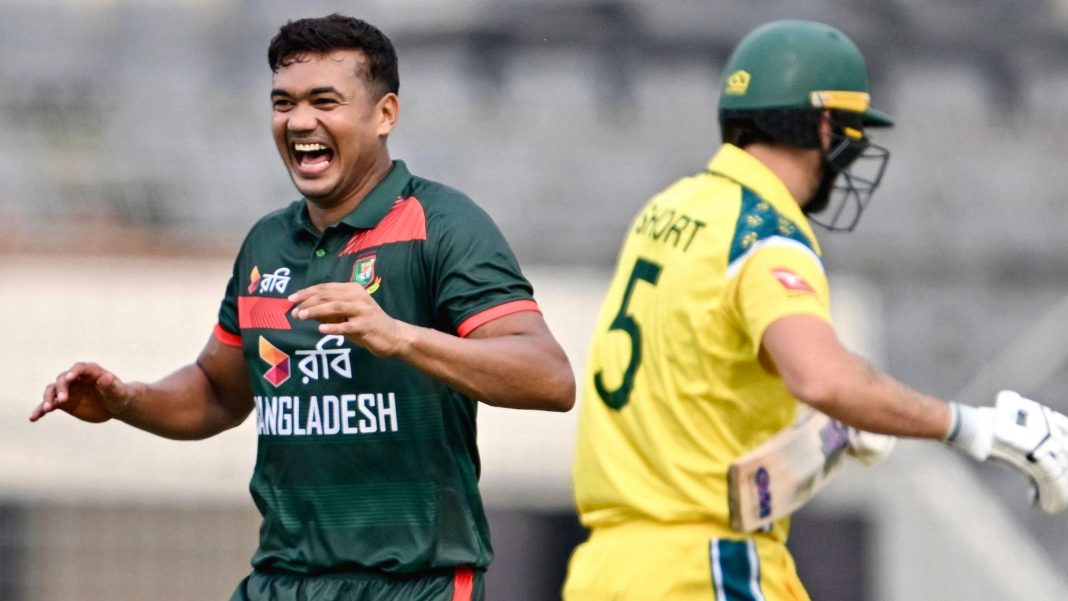
The cricket rivalry between Australia and Bangladesh brings together two teams with different histories, playing styles, and approaches to international cricket. Australia has traditionally been one of the strongest sides in world cricket, known for its aggressive batting, disciplined bowling, and success in major tournaments. Bangladesh, meanwhile, has developed into a competitive international team with talented batters, skilled spinners, and the ability to challenge established opponents in favourable conditions.
An Australia vs Bangladesh contest can be fascinating because the balance often depends on the format, venue, pitch conditions, and the performances of key players. Australia’s pace attack and powerful middle order can make a difference on fast, bouncy surfaces, while Bangladesh’s spinners and technically capable batters can become especially influential on slower pitches. These contrasting strengths create several tactical battles throughout a match.
For cricket followers, understanding this matchup involves more than looking at previous results. Team combinations, recent form, batting partnerships, bowling changes, and pressure management all help explain how a contest might develop. Examining these factors provides a useful way to understand the rivalry across Test cricket, One Day Internationals (ODIs), and Twenty20 Internationals (T20Is).
History of Australia and Bangladesh in International Cricket
Australia and Bangladesh have followed very different paths in international cricket. Australia established itself as a major cricketing nation during the early development of the international game, building a reputation through successful Test series, Ashes contests, and global tournaments. Its cricketing culture has consistently emphasised competitiveness, adaptability, and the ability to perform under pressure.
Bangladesh entered Test cricket in 2000 after gaining full membership of the International Cricket Council. Since then, the country has invested heavily in developing domestic cricket, improving its international standards, and producing players capable of competing against leading teams. Victories against stronger opponents, particularly in limited-overs cricket, have helped Bangladesh build confidence and attract a passionate fan base.
The Australia vs Bangladesh rivalry has included contests in all three major international formats, although the number and frequency of meetings differ between formats. Australia has generally enjoyed the stronger overall record, particularly in Tests and ODIs. Bangladesh, however, has demonstrated that it can create difficult conditions for visiting teams, especially when matches are played on slower Asian pitches.
These encounters also reflect the broader development of international cricket. Bangladesh’s progress has encouraged more competitive matchups, while Australia’s experience and depth have made each meeting a valuable test of preparation and execution.
Australia vs Bangladesh Head-to-Head Record
The head-to-head record has historically favoured Australia, but recent results show that Bangladesh is increasingly capable of competing successfully against its more established opponent. The format matters considerably: Test matches reward patience and sustained performance, ODIs demand balance across 50 overs, and T20Is often turn on short periods of explosive batting or decisive bowling.
The teams produced memorable results in 2026. Bangladesh won the opening Test in Darwin by nine wickets, securing its first Test victory on Australian soil. Australia responded in the second Test at Mackay with an innings-and-51-run victory, leaving the two-match series level at 1–1. Bangladesh also achieved a historic men’s ODI series victory at home in June 2026, winning all three matches.
These results demonstrate why historical statistics should be considered alongside current performance. Australia still possesses substantial experience and depth, but Bangladesh’s home advantage and growing confidence can change the competitive balance.

Format-Wise Comparison
| Cricket format | Traditional Australian advantage | Bangladesh’s main opportunity |
|---|---|---|
| Test cricket | Pace, experience and batting depth | Spin, patience and sustained pressure |
| ODI cricket | Strong batting lineup and varied bowling | Home conditions and disciplined partnerships |
| T20I cricket | Power-hitting and pace variations | Spin bowling, aggressive starts and momentum |
| Major tournaments | Experience in high-pressure matches | Tactical discipline and standout individual performances |
The table describes general team strengths rather than guaranteeing a result in any particular match.
Australia vs Bangladesh in Test Cricket
Test cricket provides one of the clearest examples of the contrasting strengths of these teams. Australia has traditionally relied on technically sound batters, fast bowlers capable of exploiting bounce, and spinners who can control the middle stages of an innings. Its players are accustomed to long contests in which fitness, concentration, and tactical discipline become increasingly important.
Bangladesh has often relied on spin bowling and the ability to bat patiently when conditions favour slower play. Players who can occupy the crease for extended periods are particularly valuable because large first-innings totals can put considerable pressure on the opposition. Effective spin bowling can also expose batters who struggle to score freely when the ball turns or the pitch becomes uneven.
The 2026 Test series illustrated both sides of this contest. Bangladesh’s nine-wicket victory in Darwin was a landmark achievement, with Mehidy Hasan Miraz and Hasan Mahmud among the key contributors. Australia then recovered strongly in Mackay to win the second Test by an innings and 51 runs. The series showed that neither team could rely on reputation alone.
For supporters analysing a Test match, useful indicators include the first-innings lead, the number of overs bowled by the main fast bowlers, partnerships for the fourth and fifth wickets, and the effectiveness of spin in the second innings.
ODI Cricket: Batting Depth and Tactical Planning
One Day Internationals require teams to balance aggression with control. Australia has historically been successful in this format because of its ability to build substantial totals, recover after losing early wickets, and maintain pressure during the middle overs. Its batters can accelerate at the end of an innings, while its bowlers are generally equipped to attack with both pace and variation.
Bangladesh’s ODI approach has often benefited from familiarity with local pitches and conditions. Batters who rotate the strike efficiently can prevent bowlers from settling into a predictable rhythm, while spinners can make run-scoring difficult during the middle overs. Strong performances from the top order also allow the middle order to finish an innings with greater freedom.
The 2026 ODI series in Bangladesh marked a major turning point. Bangladesh won the first match by 86 runs under the Duckworth–Lewis–Stern method, followed by a five-wicket victory in the second ODI. The hosts completed a 3–0 series sweep on 14 June, when Australia won the third match by one wicket after Bangladesh posted 274/5. The result gave Bangladesh its first men’s bilateral ODI series win over Australia.
This series highlights the importance of consistency. Winning one match requires a strong performance on the day, but winning three consecutive matches demands effective preparation, adaptability, and contributions from several players.
T20 International Cricket: Power and Momentum
T20 cricket introduces a different set of challenges. Batters must score quickly without losing too many wickets, while bowlers need to prevent boundaries and adapt to changing conditions. A single over can significantly alter the required run rate, making decision-making under pressure essential.
Australia traditionally benefits from explosive batters, athletic fielders, and fast bowlers who can use slower deliveries and accurate yorkers. Bangladesh can counter these advantages through disciplined spin bowling, clever changes of pace, and aggressive batting during the powerplay. Its familiarity with turning pitches can also make a difference when the contest takes place at home.
The shortest format is particularly unpredictable because a relatively small number of deliveries can decide the outcome. A team that loses three early wickets may still recover through one outstanding partnership, while a seemingly comfortable chase can become difficult after a couple of economical overs.
When evaluating a T20 contest, consider these factors:
-
Powerplay performance: Runs scored and wickets lost during the opening six overs.
-
Middle-over control: How effectively spinners and change-of-pace bowlers restrict scoring.
-
Death-over execution: The ability to hit boundaries or defend a target in the final overs.
-
Fielding standards: Catches, run-outs, and boundary saves that influence close matches.
-
Pressure management: Whether players maintain their plans when the required run rate increases.
These indicators provide a more meaningful picture than looking at a team’s reputation alone.
Key Players Who Can Influence the Contest
Individual performances often determine the outcome of matches between these sides. Australia has a deep pool of experienced international players, while Bangladesh has developed several cricketers who can influence games with both bat and ball. Player availability, fitness, recent performances, and the selected playing XI should always be checked before making a match assessment.
For Australia, the importance of its top-order batters lies in their ability to establish a platform. Experienced batters can absorb early pressure before accelerating, while aggressive middle-order players can change the momentum quickly. The fast-bowling unit is equally important, especially when the pitch offers bounce or movement. Spinners such as Adam Zampa can also provide control in limited-overs matches.
Bangladesh’s strengths include technically capable batters, effective spin options, and versatile all-rounders. Mehidy Hasan Miraz can contribute in both departments, while experienced players such as Mushfiqur Rahim and Mustafizur Rahman have played important roles in Bangladesh cricket across their international careers. The availability and current form of individual players will depend on the format and squad selected.

Important Match Factors
-
Top-order stability: Both teams need their opening batters to manage the new ball and avoid unnecessary early wickets.
-
All-round contributions: Players who contribute runs and wickets provide valuable balance to the playing XI.
-
Bowling combinations: The right mix of fast bowlers, spinners, and seam-bowling all-rounders depends on the surface.
-
Fitness and selection: Injuries, workload management, and recent form can influence team balance.
-
Fielding pressure: Sharp catching and accurate throwing can make a decisive difference in close contests.
Pitch Conditions and Home Advantage
Pitch conditions are especially important when assessing Australia and Bangladesh. Australian grounds often provide greater bounce and pace, although the characteristics vary considerably between venues. Batters who play confidently off the back foot can benefit from these surfaces, while fast bowlers may find opportunities through movement and extra bounce.
Bangladesh’s home grounds often offer slower surfaces that reward patience and effective spin bowling. Such pitches can make stroke-making more difficult as a match progresses, particularly when the ball grips or turns. However, conditions are not identical at every venue, and weather, grass coverage, and preparation can all affect how the surface behaves.
Home advantage also includes familiarity with local conditions, travel routines, crowd support, and knowledge of the ground. Bangladesh’s successful 2026 ODI series demonstrated how effectively the team could use its home environment. Australia’s response in the third ODI, when it narrowly won by one wicket, also showed that familiarity with conditions does not eliminate the need for strong execution.
How to Analyse Australia vs Bangladesh Before a Match
A sensible match preview combines historical results with current information. Past records provide context, but they cannot reliably predict the next result without considering team selection, venue, recent form, and match conditions.
When preparing an Australia vs Bangladesh match analysis, start by identifying the format and location. A Test played in Australia presents different challenges from a T20I on a slow surface in Dhaka. Next, review each team’s recent results and assess whether its batters and bowlers have performed consistently.
The toss may also influence the strategy. In limited-overs cricket, batting first can help a team establish scoreboard pressure, while chasing may be attractive when conditions are expected to improve or the target is manageable. In Test matches, the decision depends on the pitch, weather forecast, and the likelihood of conditions changing over several days.
Use the following checklist to develop a balanced preview:
-
Review the confirmed squads and likely playing elevens.
-
Compare recent results in the same format.
-
Examine the venue’s pitch characteristics and expected weather.
-
Identify the most influential batters and bowlers.
-
Consider how each team might respond to losing early wickets.
-
Review the toss and any last-minute team changes before finalising your assessment.
Avoid relying on a single statistic or assuming that previous victories guarantee future success. Cricket outcomes depend on a combination of preparation, execution, and changing match situations.
Why This Rivalry Matters to Cricket Fans
The significance of this matchup extends beyond individual wins and losses. Australia represents a long-established cricketing powerhouse, while Bangladesh’s progress reflects the increasing competitiveness of international cricket. Encounters between them allow fans to assess how different playing styles respond to unfamiliar conditions and high-pressure situations.
For Bangladesh, victories against Australia can strengthen confidence and demonstrate the effectiveness of its domestic development system. For Australia, challenging tours and difficult matches provide opportunities to adapt tactics, test squad depth, and maintain high standards across formats.
The rivalry is also valuable for fans who follow cricket statistics, match scorecards, and tournament standings. Comparing results across formats reveals how the same teams can experience very different outcomes depending on conditions and preparation. The 2026 Test series draw and Bangladesh’s ODI series sweep are clear examples of why each format deserves separate analysis.
Conclusion
The Australia vs Bangladesh cricket rivalry combines Australia’s established international experience with Bangladesh’s growing competitiveness and ability to perform strongly at home. Australia continues to possess significant strengths in batting depth, pace bowling, and experience, while Bangladesh can challenge its opponent through spin, disciplined batting, and effective use of local conditions.
The results of 2026 have added an important chapter to this rivalry. Bangladesh achieved a historic ODI series sweep and a landmark Test victory in Australia, while Australia demonstrated its resilience by winning the second Test and narrowly taking the final ODI. These results underline the importance of evaluating each match independently rather than relying entirely on historical dominance.
For cricket fans, the best way to understand this contest is to consider the format, pitch, team selection, player form, and tactical decisions together. These factors provide a stronger foundation for analysing upcoming matches and appreciating the competitive qualities both teams bring to international cricket.

